Last Updated: September 4, 2026
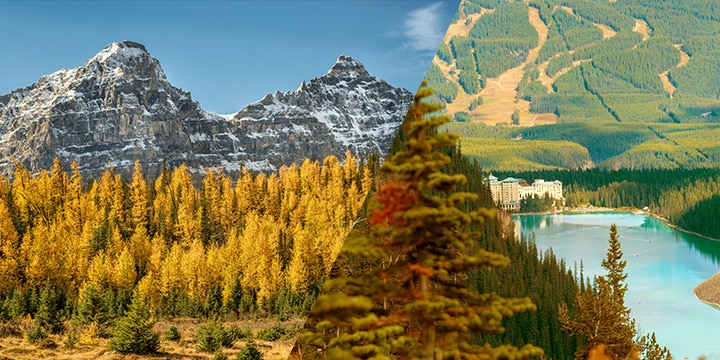
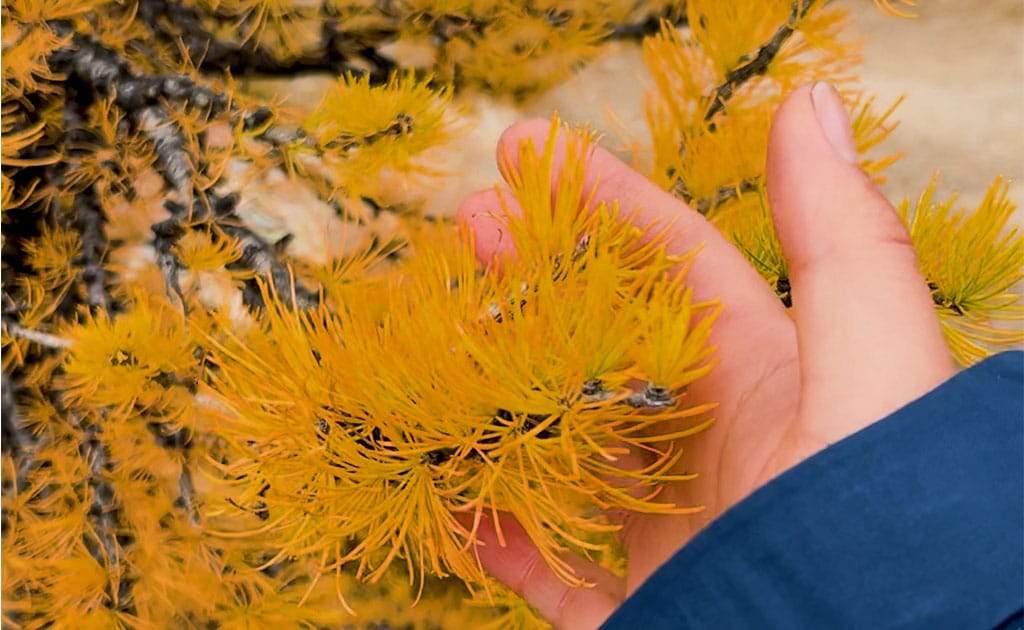
For about two weeks every fall, the larch trees lining this valley below the Ten Peaks turn a colour that doesn’t look quite real — a deep, glowing gold that photographers plan entire trips around. Larch Valley is an 8.9 km (5.5 mi) round-trip hike from Moraine Lake, and it’s the single best introduction to what everyone means when they talk about “the valley of the larches.” Access is by shuttle only, the window is short, and it closes fast once Moraine Lake Road shuts down for the winter — so here’s everything you need to time it right.
Larch Valley at a Glance
| Distance | 8.9 km (5.5 mi) round trip to Minnestimma Lakes |
| Elevation gain | 564 m (1,850 ft) |
| Time | 3–4.5 hours round trip |
| Difficulty | Moderate — 10 switchbacks, then a gentler grade |
| Peak larch color | Mid- to late September, typically fading by early October |
| Trailhead | Moraine Lakeshore Trail, beside Moraine Lake Lodge |
| Getting there | Shuttle only — Moraine Lake Road is closed to private vehicles |
| 2026 season | Lake access runs to October 12; the road closes for winter October 13 |
| Group access | No group hikes alone — check current Parks Canada trail conditions before you go (bears are active in berry season) |
| Extension | Sentinel Pass adds roughly 2.7 km (1.7 mi) and 185 m (600 ft) to the round trip |
How Do I Get to the Larch Valley Trailhead?
The trailhead sits right at Moraine Lake, along the Moraine Lakeshore Trail near Moraine Lake Lodge. Getting to the lake itself is the part that trips people up: Moraine Lake Road has been closed to personal vehicles since 2023, so there’s no driving yourself in, no dropping off, and no parking lot to gamble on. The only ways in are a Parks Canada shuttle, a commercial operator like ours, or your own two feet or biking.
For almost everyone, that means booking a Moraine Lake shuttle in advance. Larch season is the busiest stretch of the fall calendar in Banff National Park. Seats go fast on the weekends closest to peak colour, so book earlier than you think you need to.
Can I Walk or Bike to Moraine Lake?
You can, though most hikers prefer to save their legs for Larch Valley itself. Moraine Lake Road runs about 12.5 km one way from its junction near Lake Louise, so walking or biking in and out from the Lake Louise townsite adds roughly 28 km (17 mi) round trip on top of the hike — more if you’re starting from a campground or hotel further out. It’s a legitimate option if you’re already on a bike and comfortable sharing a narrow mountain road with shuttle traffic, but it turns a moderate half-day hike into a full and tiring day.
When’s the Best Time to See the Golden Larches?
Larch Valley changes character completely across the season, and when you go decides what kind of day you’re going to have.
- Late June: Snow can still linger in shaded pockets of the valley and around Minnestimma Lakes, which makes for a striking, wintry-alpine look. But expect some snow travel and check trail conditions first.
- Mid-July: Wildflowers take over the meadows and the trail is at its driest and most straightforward. This is peak summer, and peak crowds to match.
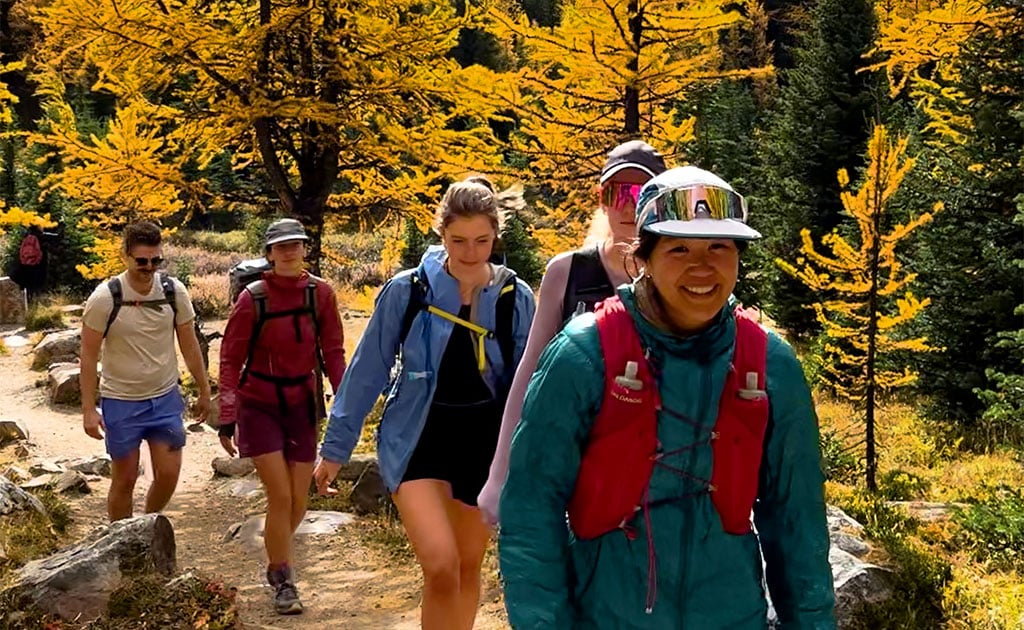
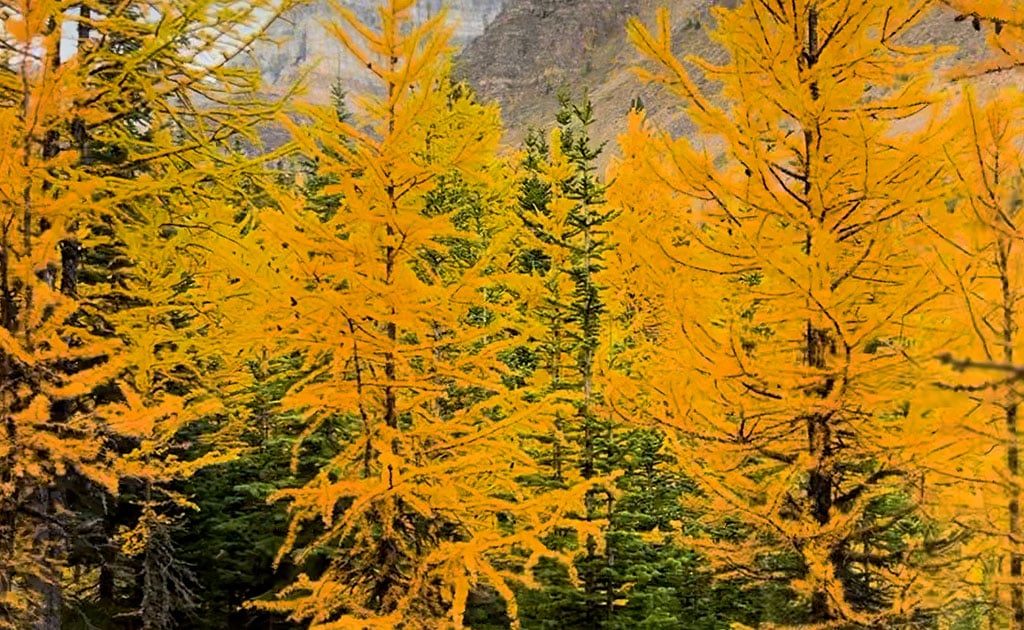
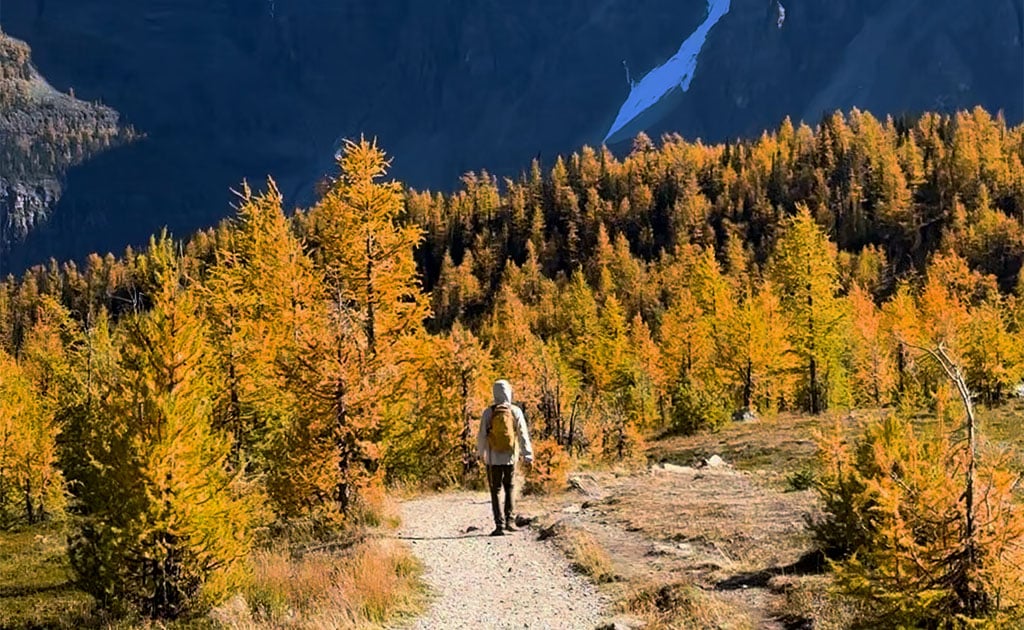
- Mid- to late September: This is what people come for. The larch needles turn from green to a rich gold over the course of a couple of weeks, usually cresting in the last week or two of September and holding, weather depending, into the first few days of October. It’s a short window, and it moves a little every year with temperature and early snowfall. There’s no single date that’s “always” peak, so if you have flexibility, watch local trail and foliage reports in the two weeks before you go rather than locking in a date months out.
That short window also runs right up against the end of the season. In 2026, Moraine Lake shuttle and lake access runs through October 12, with Moraine Lake Road closing to all traffic for the winter the following day. Once the road closes, Larch Valley is off the table until the following June. So if the larches are your goal, don’t leave your visit for “sometime in early October” and hope it works out.
Early-hiker tip: Larch Valley faces the kind of open, high-alpine terrain that’s exposed to afternoon buildup and can draw a crowd by mid-morning once the parking-free crowds of shuttle-goers arrive. Taking one of the first departures of the day — the same logic behind our Moraine Lake sunrise shuttle — gets you on the trail while the light is at its best and the switchbacks are still quiet.
What Are the Rules for Hiking Larch Valley?
Group Access & Bear Safety
Larch Valley sits in prime grizzly habitat, and fall is prime feeding season. Bears spend late summer and early fall bulking up on buffaloberries in exactly the kind of shrubby, subalpine terrain this trail passes through. Parks Canada’s current trail conditions report for this stretch flags it directly: it’s berry season, and bear encounters are possible.
Because of that, Parks Canada sometimes puts a temporary minimum group size in place on this trail and its neighbours (Sentinel Pass and Paradise Valley) when bear activity is high — requiring hikers to travel in a tight group of four or more, with no gaps between hikers. There’s no such order in place as we publish this, but conditions can change quickly during berry season, so check the official Parks Canada trail conditions report the morning of your hike, not the week before. Even without a formal order, hiking in a group of four or more, making noise on blind corners, and carrying accessible bear spray are all standard, sensible practice here.
Beyond the bear safety piece, it’s worth remembering you’re a guest in this landscape. Stay on the trail to protect the fragile alpine vegetation, and give any wildlife you encounter plenty of space. You’re visiting these animals’ home, not the other way around.
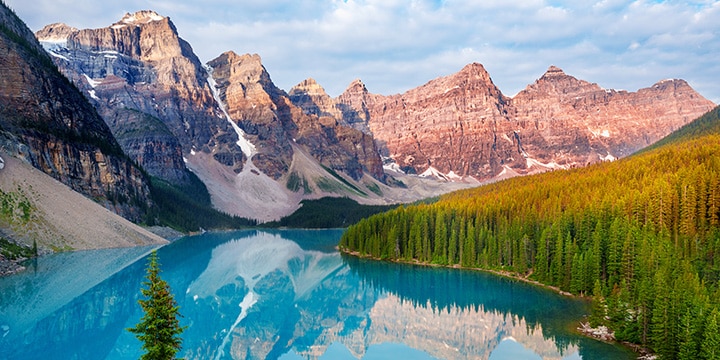
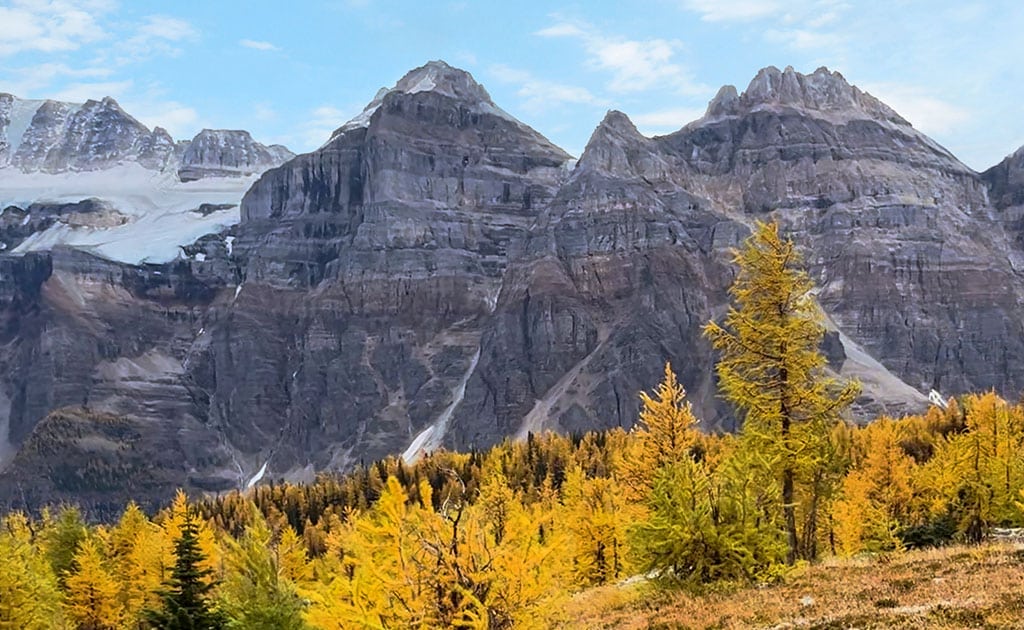
It’s also worth knowing whose home this has been far longer than it’s been a hiking trail. The Valley of the Ten Peaks — the dramatic wall of summits Larch Valley looks out on — sits on the traditional territory of the Stoney Nakoda people, who named the peaks Wenkchemna, their word for the number ten.
What Else to See Around Moraine Lake in Autumn
If you’ve got a full day at the lake, or you’re travelling with someone who isn’t up for the full Larch Valley climb, autumn is a great excuse to see more of what’s around Moraine Lake.
- Consolation Lakes: A gentler alternative at 6 km (3.7 mi) round trip with about 240 m (790 ft) of elevation gain — roughly 1.5 to 2 hours at an easy pace. It shares a trailhead area with the Rockpile and gets a fraction of the foot traffic, with its own larches and a view up at Mount Babel and the Tower of Babel.
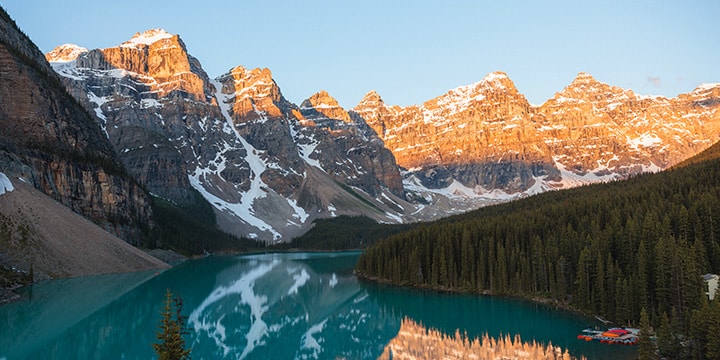
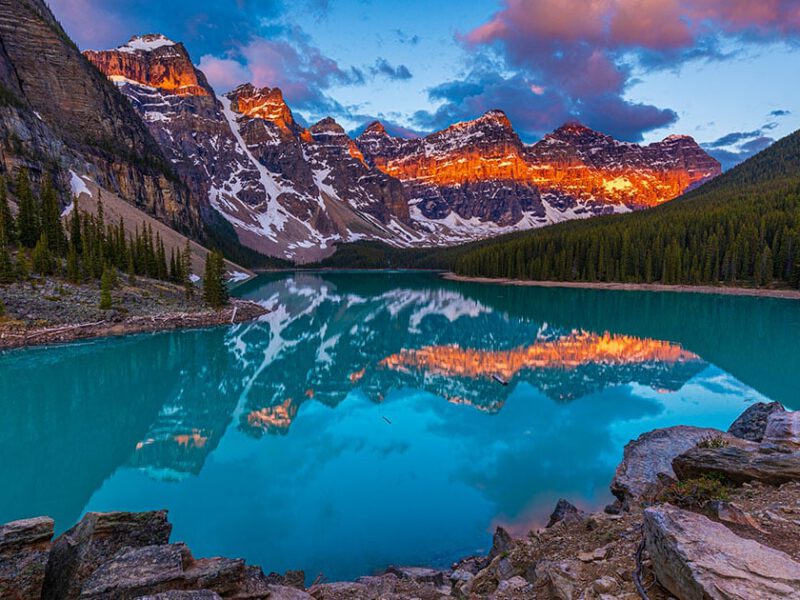
- The Rockpile: Moraine Lake’s classic viewpoint is only 0.8 km (0.5 mi) round trip and takes most people 10 to 20 minutes, but it’s worth timing deliberately in fall. The lower autumn sun angle throws long light across the Ten Peaks in a way summer’s overhead sun doesn’t.
- Eiffel Lake: A quieter way to chase larch color without the Sentinel Pass climb. It’s about 12.2 km (7.6 mi) round trip with 610 m (2,000 ft) of elevation gain, typically 3 to 4 hours, and it runs through larch stands of its own on the way to a lake tucked below Eiffel Peak. Strong hikers with time to spare can extend it another 3 km one way toward Wenkchemna Pass.
On the Trail: Larch Valley Hiking Guide
1. Beginning the Hike
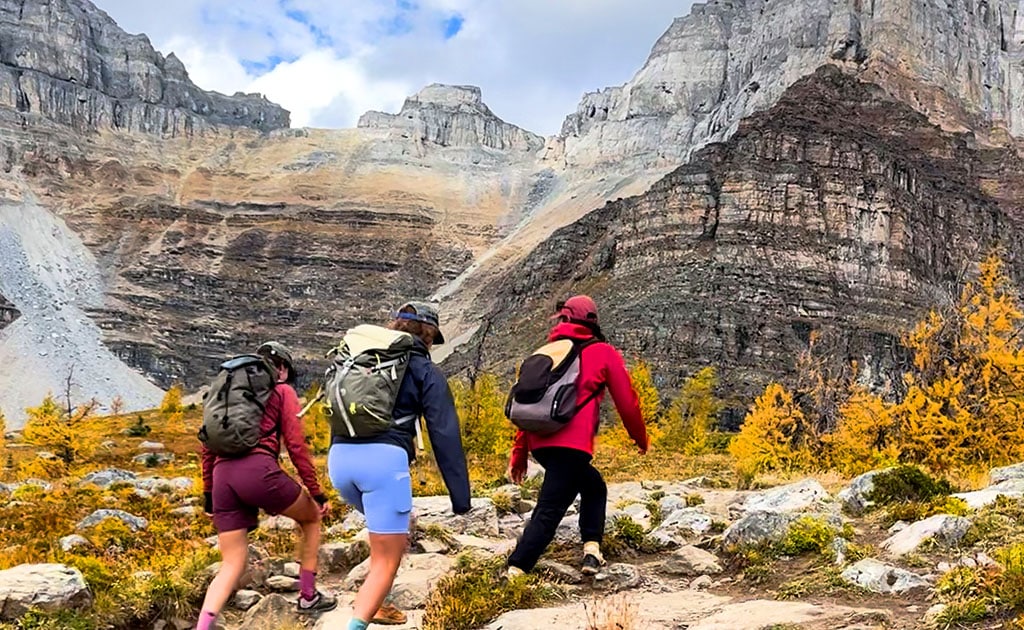
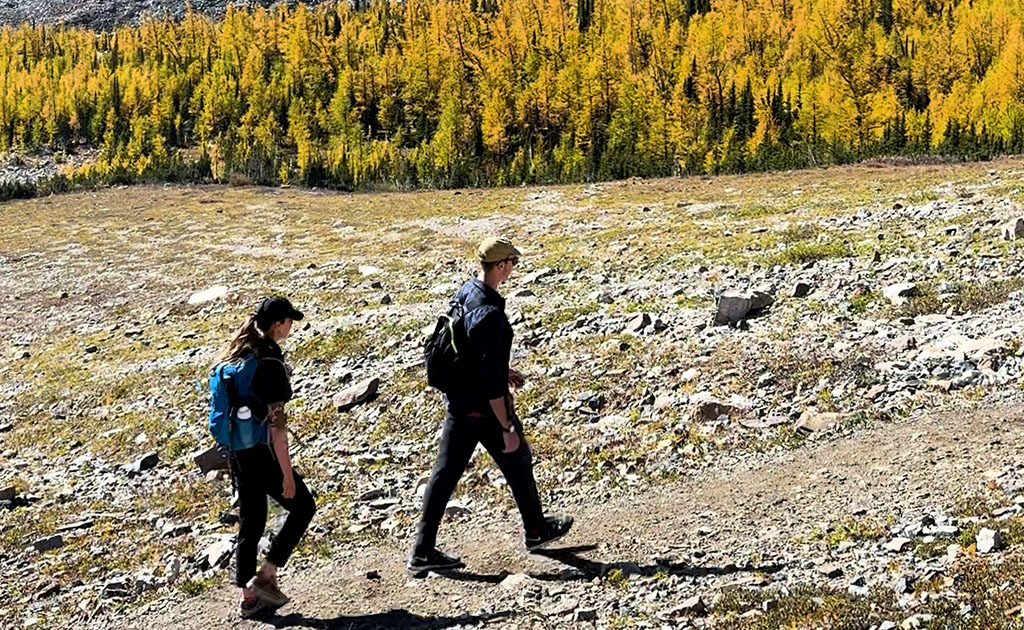
From the trailhead beside Moraine Lake Lodge, the trail climbs gradually through subalpine forest before the real work begins: a set of 10 switchbacks that gain most of the trail’s elevation in a short distance.
2. Switchback City
This is the section most hikers remember as the toughest part of the day. It’s steep and it’s steady, but it’s also short. The forest opens up in places to give you a preview of the peaks you’re climbing toward.
3. Beautiful Larch Valley
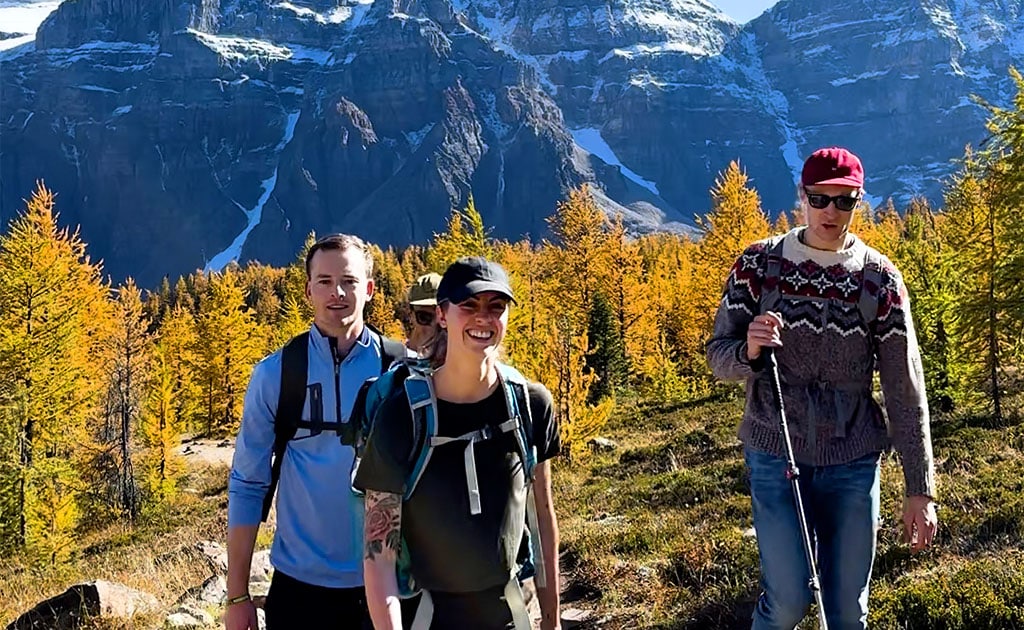
Once the switchbacks ease off, the trees thin out and Larch Valley opens in front of you: a wide alpine basin ringed by the Ten Peaks, with the larches themselves scattered across the meadows. In fall, this is the payoff — the reason people book their shuttle around this exact window.
4. On to Minnestimma Lakes
The trail continues gently through the upper valley to the Minnestimma Lakes, a pair of small alpine tarns sitting in the shadow of Mount Temple, the highest peak in the Lake Louise area. This is the turnaround point for the standard 8.9 km round trip and a natural spot for lunch before heading back down.
5. Sentinel Pass
For hikers with energy left in the tank, the trail keeps climbing past Minnestimma Lakes up a final, steep stretch of scree to Sentinel Pass — at roughly 2,611 m (8,566 ft), the highest point reachable on a day hike from Moraine Lake. Continuing to the pass brings the round trip to somewhere around 11.6 km (7.2 mi) with about 750 m (2,460 ft) of total elevation gain, typically 5 to 6 hours out and back including the extra climb.
The pass itself sits in a narrow saddle between Eiffel Peak and Mount Temple, marked by the Grand Sentinel, a massive freestanding quartzite spire. From the top, the view drops away into Paradise Valley on the far side — a genuinely different perspective from the Ten Peaks panorama you just climbed out of, and a strong reason to keep going if your legs and your schedule allow it.
FAQs
When do the larches turn gold in Larch Valley? Typically mid- to late September, with color usually holding into the first few days of October before the needles drop. The exact window shifts a little every year with weather, so check current conditions in the two weeks before your trip rather than planning around a fixed date.
How long is the Larch Valley hike? 8.9 km (5.5 mi) round trip from Moraine Lake to Minnestimma Lakes, with 564 m (1,850 ft) of elevation gain — typically 3 to 4.5 hours. Continuing to Sentinel Pass adds about 2.7 km (1.7 mi) and 185 m (600 ft), bringing the full round trip closer to 5 to 6 hours.
Can you drive to the Larch Valley trailhead? No. The trailhead is at Moraine Lake, and Moraine Lake Road has been closed to personal vehicles since 2023. Access is by commercial shuttle, the Parks Canada shuttle, or on foot or bike via the road, which adds roughly 28 km (17 mi) round trip from Lake Louise.
Do you need to hike in a group of four in Larch Valley? Not always. It depends on current bear activity. Parks Canada can put a mandatory minimum group size of four in place on this trail, along with Sentinel Pass and Paradise Valley, during periods of high grizzly activity, which often overlaps with larch season. Check the official Parks Canada trail conditions report before you set out, since this can change with little notice.
Is Larch Valley worth it outside of larch season? Yes, but it’s a different hike. Outside the gold window, you’re hiking for the Valley of the Ten Peaks, the Minnestimma Lakes, and a quiet alpine basin rather than the colour — still a genuinely beautiful trail, just without the two weeks of fame.
What else is worth seeing around Moraine Lake in the fall? Consolation Lakes is a gentler option with far fewer people, the Rockpile is at its best as the sun angle drops in autumn, and Eiffel Lake offers larch views of its own without the Sentinel Pass climb.
Book Your Larch Season Shuttle
Larch Valley’s gold only lasts a couple of weeks, and the road only stays open a little longer than that. If you’re planning a fall trip to Banff National Park around the larches, lock in your Moraine Lake shuttle early — seats for peak-colour weekends are the first to go. Pair it with a Lake Louise shuttle ticket to make a full day of both lakes, lace up your boots, and get up into the valley while the larches are still glowing.